
Vietnam-China ties offer new opportunities for Asia-Pacific cooperation
As China prepares to host APEC 2026 and Vietnam gets ready to assume the host role in 2027, experts and business representatives from the two countries have highlighted opportunities to deepen industrial cooperation, advance technological innovation and strengthen regional connectivity.
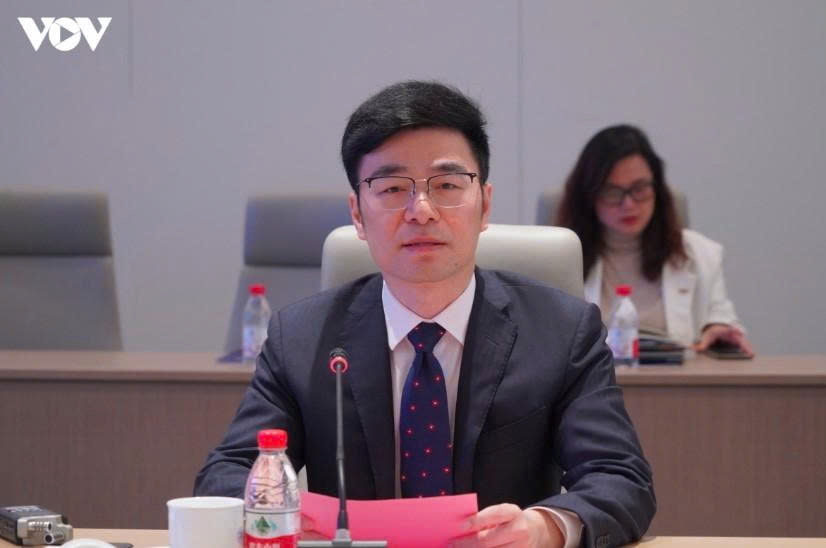
Experts, scholars and business representatives discussed regional cooperation and the prospects for Vietnam-China relations within the APEC framework at a dialogue held in Hangzhou, China, on November 13, ahead of the 2026 APEC Economic Leaders' Meeting in Shenzhen.
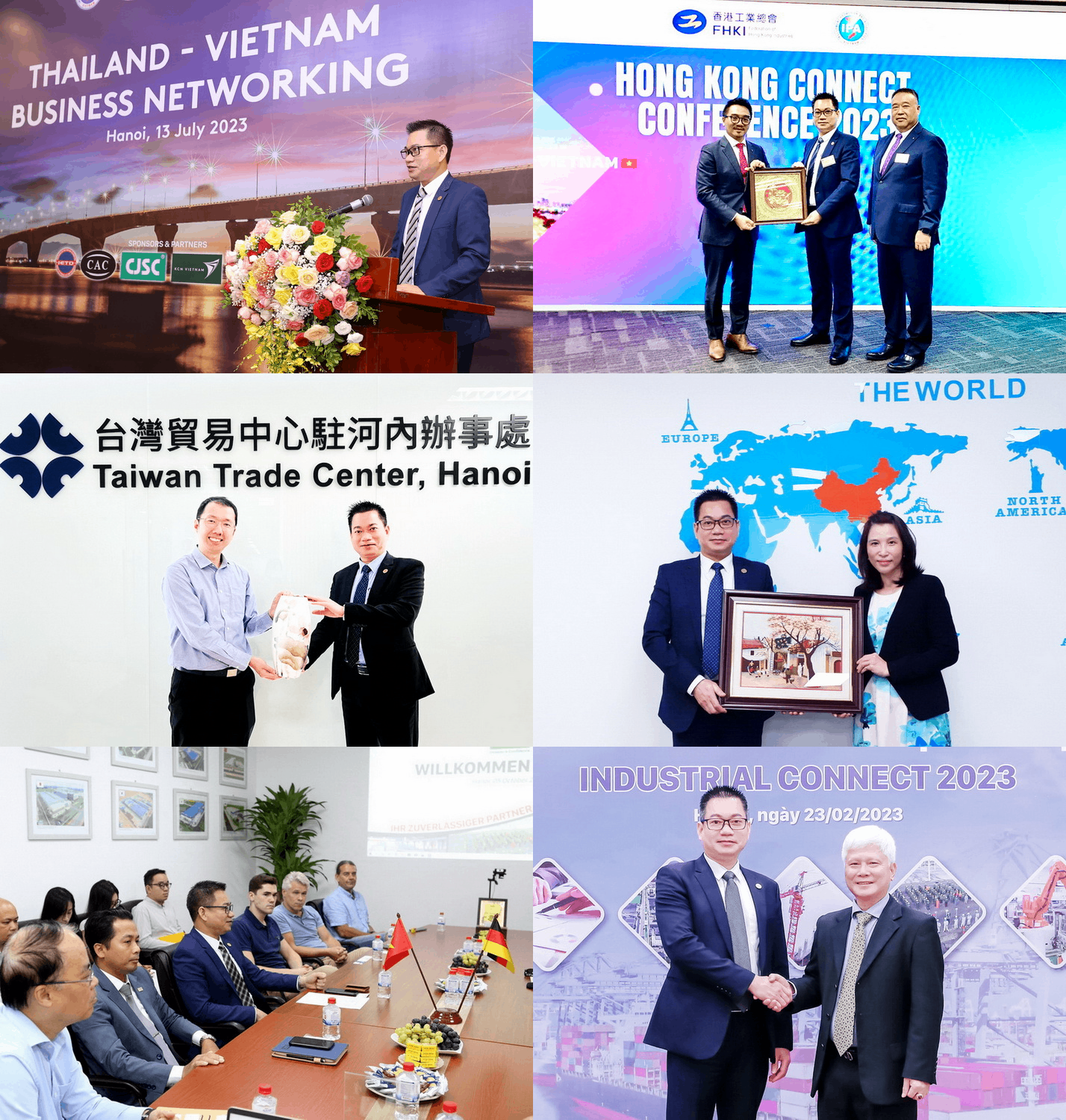
In his remarks, Chen Yao, vice president of the Zhejiang University of Technology, which co-hosted the dialogue with China Media Group (CMG), emphasised that Vietnam's preparations to assume the APEC host role in 2027 would link the responsibilities and opportunities of the two countries in advancing Asia-Pacific cooperation.
He highlighted three cooperation proposals outlined by Vietnamese Foreign Minister Le Hoai Trung in preparation for APEC Year 2027 including building an innovative and productive, open and connected, and resilient and dynamic Asia-Pacific region. These priorities, he noted, closely align with China’s APEC 2026 theme of "Building an Asia-Pacific Community to Prosper Together," focusing on openness, innovation and cooperation.
Industrial cooperation and technology offer new growth opportunities
On bilateral economic ties, Chen pointed out that Chinese investment in Vietnam has gradually moved beyond labour-intensive industries into higher-value sectors, including electronics, semiconductors, artificial intelligence (AI) and green energy.
Vietnam has identified high technology, research and development (R&D), digital transformation and clean energy as priority areas for attracting investment. It also expects Chinese businesses to help increase local content, strengthen supporting industries and facilitate substantive technology transfer.
This reflected a shift in China-Vietnam cooperation from expanding its scale towards closer coordination across industrial supply chains, an important area of cooperation in building an Asia-Pacific Community, he said.
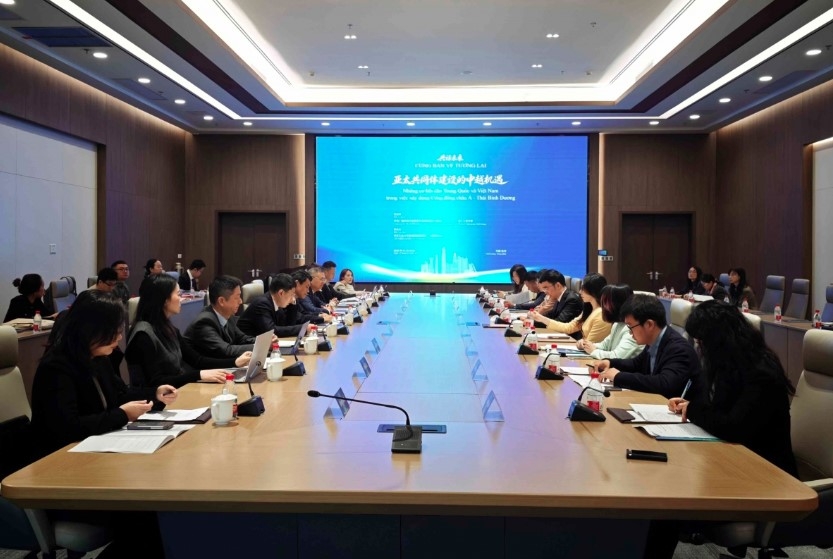
Overview of the seminar
Participants agreed regional cooperation is facing both new opportunities and challenges. As important members of the Asia-Pacific region, Vietnam and China have shared interests in exploring new drivers of industrial transformation, economic and trade cooperation, and connectivity under the APEC framework.
Discussions covered the development of an Asia-Pacific Community, digitalisation and green transformation, industrial connectivity, and opportunities for bilateral and multilateral cooperation. Participants also explored common ground in the digital economy, low-carbon development and scientific and technological innovation.
Professor Zhao Weihua, director of the Centre for China’s Relations with Neighbouring Countries at Fudan University, said high-level consensus between the two countries is increasingly being translated into concrete cooperation frameworks.
He identified three key areas: railway infrastructure connectivity; institutionalised trust-building in security and strategic affairs; and improvements in both the scale and quality of economic and trade cooperation.
Zhao also highlighted the importance of coordinated development between the two countries, referring to top Vietnamese leader To Lam’s emphasis during his visit to China earlier this year on making innovation a key driver of bilateral cooperation.
He said this reflected a growing recognition in Vietnam that China-Vietnam cooperation is moving beyond traditional trade towards industrial coordination and the development of modern capabilities.
Zhao identified six promising areas for cooperation in the context of the Fourth Industrial Revolution: AI and automation; smart manufacturing and intelligent vehicle technologies; green technology and digital transformation; new energy and nuclear energy; modern agriculture; and cross-border e-commerce.
Stronger connectivity to support regional integration
Associate Professor Duong Van Huy of the Institute for Asia-Pacific Studies under the Vietnam Academy of Social Sciences held that, despite growing international divisions and instability, countries across the Asia-Pacific region continue to pursue closer cooperation and integration.
He shared the view that Vietnam-China economic relations are moving towards a model of interconnected development, stressing the importance of promoting connectivity corridors and cross-border industrial supply chain cooperation.
Huy noted that both countries are active participants in various regional multilateral cooperation mechanisms. Their bilateral relationship is increasingly becoming a factor with significant influence on developments across the Asia-Pacific region.
Closer Vietnam-China ties could therefore make an important contribution to building the Asia-Pacific Community, he affirmed.
Participants expressed confidence that strong political trust, complementary economic structures and two consecutive years of APEC hosting by China and Vietnam would provide favourable conditions for more substantive bilateral economic cooperation and contribute to shared prosperity across the region.
Source: VOV
Original link