
Vietnam, Thailand strengthen supply chain links to mark 50 years of ties
The Vietnamese Embassy in Thailand has hosted a seminar on bilateral economic connectivity to celebrate 50 years of diplomatic relations and open a new phase of trade and investment cooperation.
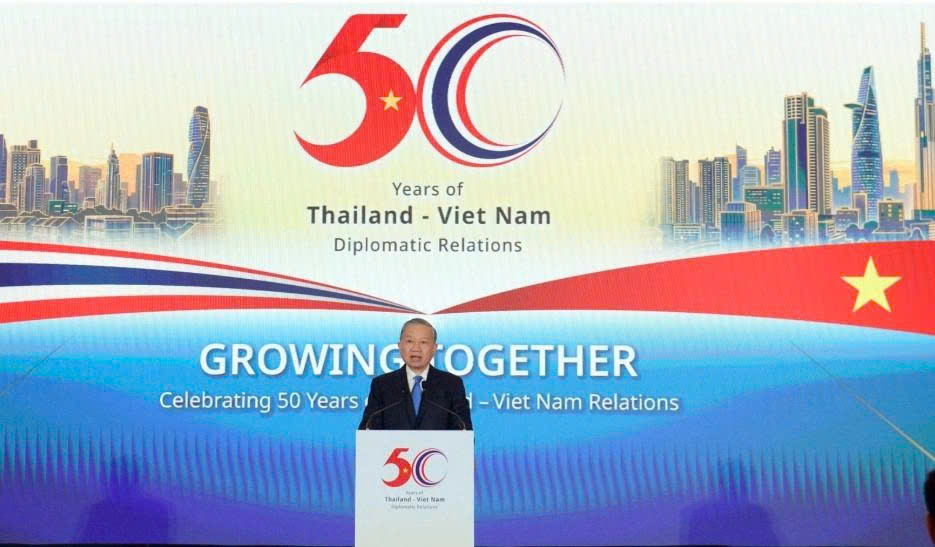
As part of activities marking the 50th anniversary of Vietnam-Thailand diplomatic relations (August 6, 1976 - August 6, 2026), the seminar gathered Thai Vice Minister of Foreign Affairs Vijavat Isarabhakdi, leaders of the Thailand-Vietnam Business Council (TVBC), the Vietnamese Association in Thailand, the Federation of Thai Industries, and the Thai Chamber of Commerce, along with business executives and scholars from both nations.
In his opening remarks, Vietnamese Ambassador to Thailand Pham Viet Hung noted that upgrading bilateral ties to a Comprehensive Strategic Partnership in May 2025 has created strong momentum for closer cooperation. Identifying economics, trade, and investment as core pillars, he stated that priority now lies not just in capital volume, but in building durable linkages between businesses and supply chains to withstand global economic shifts.
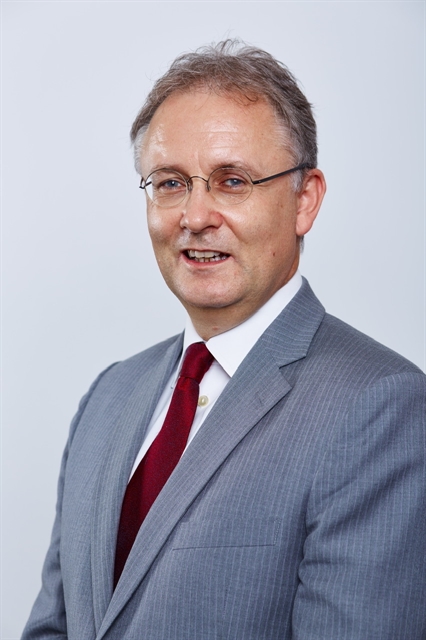
Delivering the keynote speech, Vice Minister Vijavat Isarabhakdi called for turning the Comprehensive Strategic Partnership into concrete results through the "Three Connects" strategy to maximize complementarity between the two economies.
First, he emphasized supply chain connectivity through transport infrastructure, cross-border logistics via Laos, and high-value sectors including aircraft maintenance, information technology, artificial intelligence (AI), and semiconductors. Second, he pointed to local economic connectivity backed by 20 twin-city and provincial agreements alongside roughly 250 direct weekly flights, including Thai Airways' new Bangkok-Da Nang service set to begin on December 1, 2026. Third, he outlined cooperation in sustainable development and digital finance, supported by 37 Thai-invested renewable energy projects in Vietnam worth about US$2.64 billion and bilateral QR payment integration.
During panel discussions, representatives from TVBC and Thammasat University identified strong potential for cooperation in supplier networks, AI adoption, digital trade, and green commerce across the automotive, energy, and agri-food industries.
A Thammasat University expert added that as ASEAN attracts US$244 billion in foreign direct investment, Vietnam and Thailand should move beyond competition to pool resources, accelerate technology transfer, train workers, and build shared competitiveness.
From a business perspective, Nguyen Van Phuoc Linh, Country Manager of FPT in Thailand and Taiwan (China), detailed FPT's cooperation with C.P. Group in applying AI and the Internet of Things (IoT) to the agri-food value chain. This model combines Vietnamese technology expertise with Thai manufacturing scale.
Similarly, a representative from Kim Long Motor presented its operational shift in Thailand starting in May 2026, moving from completely built-up vehicle exports to localized component assembly with a localization rate above 50%. The company plans to develop Thailand into a regional manufacturing and export base for ASEAN between 2027 and 2030.
Alongside discussions on policy and investment opportunities aimed at bringing bilateral trade to US$25 billion in the near term, the seminar also served as an open platform for business communities and scholars from both countries to build mutual trust and understanding, paving the way for substantive progress in the next phase of development.
Source: VOV
Original link