
Vietnam-Canada strategic partnership leverages strengths to consolidate positions
Vietnam-Canada strategic partnership is connecting strengths and capabilities not only in trade and investment, but increasingly deeper into technology, infrastructure, human resources, and energy transition solutions.
Both nations officially established a Comprehensive Partnership in 2017 and upgraded it to a Strategic Partnership in September 2026. As a key ASEAN member and Chair of the Comprehensive and Progressive Agreement for Trans-Pacific Partnership (CPTPP) Commission in 2026, Vietnam has become a notable partner for Canada with a major regional trade and manufacturing economy.
In this cooperative relationship, Vietnam has a strong interest in maintaining an open, stable trade environment and preserving room for cooperation with diverse partners. Conversely, Canada offers complementary strengths and relational networks, particularly in Europe and the Indo-Pacific, as well as in energy, critical minerals, finance, and advanced technologies.
Room for investment and energy cooperation
Assessing that the CPTPP has yielded positive results, making Vietnam one of Canada’s most important economic partners in the Asia-Pacific, Vice President of the Business Council of Canada Trevor Kennedy emphasizes that bilateral trade has grown rapidly in recent years, with Vietnamese goods securing a growing presence in the Canadian market. This shows the manufacturing capacity and global supply chain integration of Vietnamese enterprises.
Kennedy notes strongly expanded bilateral trade, huge potential for cooperation, especially in investment. He adds that Canada possesses key strengths in energy, oil and gas, liquefied petroleum gas (LPG), nuclear power technology, and uranium supply, which can effectively meet Vietnam’s development needs in the coming period.
Highlighting that Canada hosts some of the world's leading pension funds and institutional investors, Kennedy says that Canadian investment capital into Vietnam is still modest, leaving ample room for both sides to boost cooperation as the investment climate improves and CPTPP commitments are utilized more effectively.
"The challenge today no longer lies in whether a trade agreement exists, but in how the business community effectively leverages commitments, expands investments, and creates new cooperative projects in the next phase of development," Kennedy expressed confidence.
During a recent working session between Vietnamese Minister of Industry and Trade Le Manh Hung and Canadian Minister of Energy and Natural Resources Tim Hodgson to advance energy and technology cooperation, Minister Hodgson spoke highly of prospects for expanding investment cooperation in LNG, including Vietnamese enterprises researching participation in Canadian LNG projects. Minister Hodgson also expressed a desire to step up cooperation in nuclear technology, including CANDU reactors and Small Modular Reactors (SMRs), while strengthening connections among businesses, technology suppliers, and energy partners from both nations.
Building on the newly established framework, Vietnam and Canada are well placed to advance concrete programs, boost business participation, and incrementally turn potential into projects, making practical contributions to sustainable energy development and bilateral economic ties.
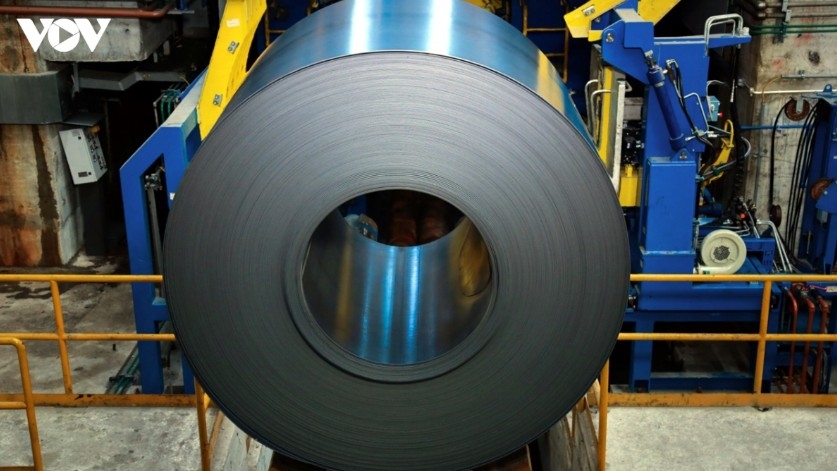
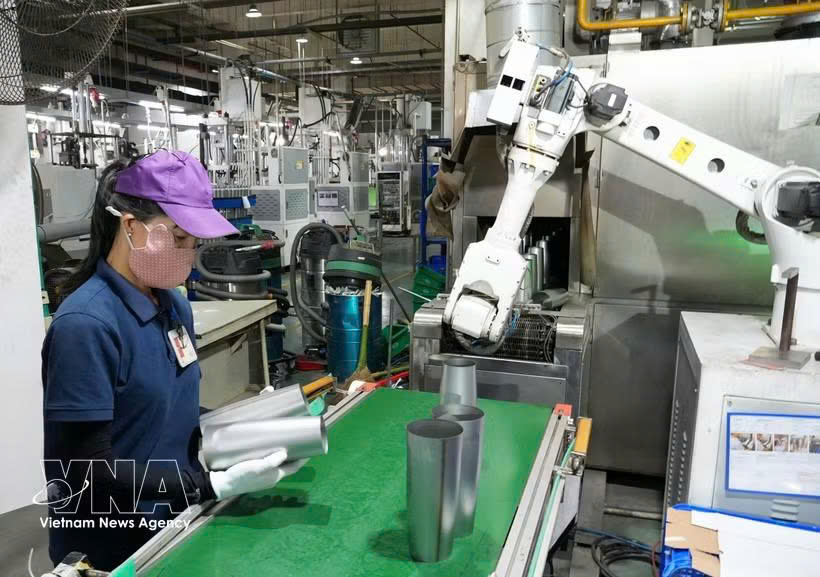
Metallurgy and mechanics offer high potential for Vietnam-Canada industrial cooperation.
Expanding new spaces for cooperation
Canada is currently Vietnam's second-largest trade partner in the Americas, while Vietnam is Canada's largest trade partner in ASEAN. According to Dr. Tran Thu Quynh, Commercial Counselor and Head of the Vietnam Trade Office in Canada, the CPTPP acts as a major driver for bilateral trade, opening new spaces for business cooperation.
"Current demand for supply diversification, as Canadian consumers and retail systems actively seek alternative sources, opens opportunities for processed agricultural and aquatic products, wooden furniture, textiles, footwear, and consumer goods from Vietnam to incrementally expand market share," Quynh says.
In the industrial sector, the Head of the Vietnam Trade Office in Canada states that Canada is reshaping its industrial policy while actively diversifying trade beyond the US market. These shifts align closely with Vietnam’s push to enhance industrial autonomy and value-added capabilities, in line with Resolution 57 on breakthroughs in science, technology, innovation, and national digital transformation; Resolution 59 on international integration in the new context; and Resolution 68 on private sector development.
Particularly as Canada actively solidifies foundational industries, restructures manufacturing networks, and seeks deeper linkages with Asia-Pacific trade partners, Vietnam has emerged as one of the region's dynamic manufacturing, precision engineering, and microelectronics assembly hubs.
This combination opens vast space for both sides to move beyond trade and subcontracting toward joint investment, product development, and technology transfer, thereby elevating their positions in global value chains, Quynh observes
To realize this potential, Quynh suggests both sides establish a specialized exchange mechanism on industrial linkages and supply chains under the Joint Economic Committee (JEC).
They can launch programs connecting Vietnamese suppliers with Canadian corporations in aerospace, automotive, energy equipment, and SMR sectors. Additionally, they can promote innovation for small and medium-sized enterprises through joint R&D projects on manufacturing automation and new materials, alongside forming production consortia to commercialize research outcomes.
Furthermore, both sides can encourage Canadian financial and credit institutions to participate in green and eco-industrial park projects in Vietnam, while promoting joint research on deep processing of critical minerals and microchip design between research institutes and universities of both countries.
Canada has provided Vietnam with nearly 200 development cooperation projects worth approximately US$1.35 billion, many of which have directly contributed to boosting the export capacity and competitiveness of Vietnamese businesses. The North American nation currently ranks as the 14th largest foreign investor in Vietnam, with 299 projects and over US$4.9 billion in registered capital.
Source: VOV
Original link