
Việt Nam plans KPIs for trade offices abroad to support exporters
In cases where export turnover to a market shows signs of decline, trade offices need to proactively identify and propose alternative markets so that the ministry has a basis for developing policies to support businesses.
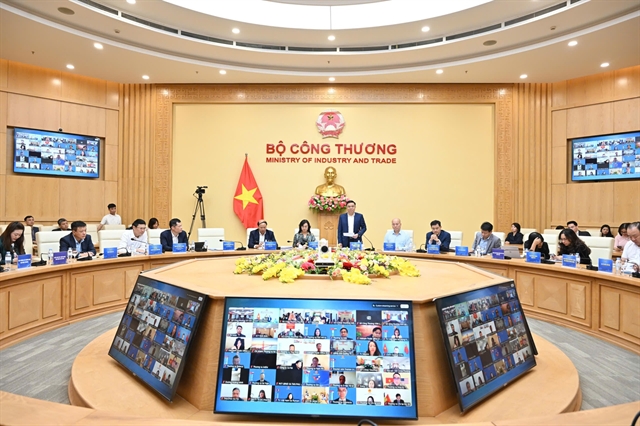
Việt Nam is considering performance targets for its trade offices abroad as part of efforts to strengthen export promotion and respond more quickly to global market shifts, the Ministry of Industry and Trade (MoIT) said.
The MoIT will study the introduction of specific performance targets (KPIs) for each Vietnamese trade office overseas, linked to the characteristics of individual markets, said director of the ministry's Import-Export Department Nguyễn Anh Sơn.
Trade offices will work with the Vietnam Trade Promotion Agency and other relevant units to help domestic businesses find partners, expand export markets and better utilise existing free trade agreements, Sơn said during a meeting on Thursday with the country’s network of trade offices abroad.
In cases where export turnover to a market shows signs of decline, trade offices need to proactively identify and propose alternative markets so that the ministry has a basis for developing policies to support businesses, he said.
The ministry also called on the overseas trade office system to strengthen early-warning mechanisms, including providing updates on trade risks, changes in import policies and potential trade defence measures from partner countries.
Such information would help Vietnamese companies adapt their export strategies and better manage risks in international trade, he said.
Alongside Government measures, Sơn urged industry associations and exporters to improve their risk management capacity.
Associations should step up the provision of market information to members, particularly alerts on shifts in trade policies, technical standards and trade barriers, he added.
Businesses were also advised to pay closer attention to contract terms in international trade deals, especially provisions related to insurance, risk management and force majeure.
Companies needed to anticipate unexpected situations that may arise in international trade, from market fluctuations to logistics disruptions or geopolitical tensions, Sơn said.
Closer coordination boosts trade
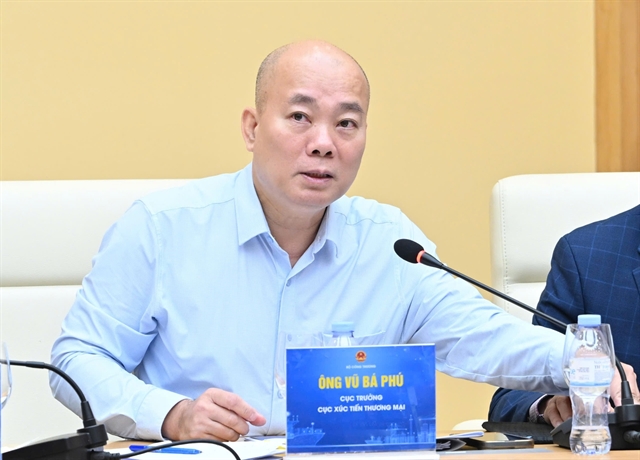 |
| Vũ Bá Phú, director of Vietrade delivered his speech at the meeting. |
For his part, Vũ Bá Phú, director of Vietnam Trade Promotion Agency, said programmes connecting Vietnamese businesses, industry associations and local authorities with the country’s overseas trade office network have delivered positive results in helping companies expand export markets.
Phú said regular meetings between domestic authorities and Việt Nam’s trade office network overseas, combining in-person and online participation, have been held by the Ministry of Industry and Trade since 2022.
Through these meetings, a network of more than 60 Vietnamese trade offices and branches abroad has become an important channel linking industries, businesses and local governments with international markets, he added.
The mechanism also allows trade offices to quickly identify the export promotion needs of sectors, localities and businesses, particularly for seasonal agricultural products, Phú said.
In recent years, many Vietnamese provinces have used the network to expand markets for agricultural exports. Beyond traditional destinations, trade offices in regions such as Europe and the Americas have also stepped up efforts to connect Vietnamese companies with potential partners.
In addition to supporting trade promotion, the overseas offices play a key role in updating market information, including changes in trade policies, technical regulations, trade defence measures and consumer trends.
Such information helps domestic authorities respond with timely policies while enabling businesses to adjust production and export strategies in line with developments in global markets, he said.
According to Phú, the Ministry of Industry and Trade will continue working with industry associations to organise trade promotion activities in key markets and maintain the presence of Vietnamese firms at major regional and global trade events.
The ministry also plans to step up cooperation with business groups to support exporters in accessing overseas markets.
Phú said proactively identifying market opportunities, diversifying export products and strengthening cooperation between regulatory agencies, trade offices and the business community would create more room for export growth in the coming years.
The country’s export turnover in January–February reached US$76.39 billion, up 18.3 per cent from the same period last year, according to compiled data cited at the meeting.
Despite the strong export growth, the country recorded a trade deficit of nearly $3 billion during the period.
Sơn from the ministry's Import-Export Department said the deficit was not a major concern because most imports consisted of machinery, equipment and raw materials used for production.
The increase in imports mainly serves production and exports in the coming period, Sơn said, adding that this indicates that Việt Nam’s industrial production and exports are preparing resources for stronger growth in the coming months.
Exports continued to grow across most major markets in the first two months of 2026, led by strong gains in Asia.
The country shipped $34.3 billion worth of goods to Asia, up 19.8 per cent from a year earlier.
Exports to China rose sharply to $11 billion, up 38.1 per cent year on year, while shipments to Japan reached $4.5 billion, up 7 per cent. Exports to South Korea totalled $5.1 billion, marking a 15.7 per cent increase.
Meanwhile, in Europe, export turnover reached $11.3 billion, up 8.6 per cent from the same period last year.
Digital platform for overseas market development launched
 |
| Deputy Prime Minister Bùi Thanh Sơn (mid) and other delegates attended to the platform launching ceremony. — VNA/VNS Photo An Đông |
Also on Thursday, the MoIT launched a digital platform for overseas market development aimed at improving trade promotion and strengthening links between Việt Nam’s overseas trade offices, local authorities and businesses.
Speaking at the event, Deputy Prime Minister Bùi Thanh Sơn praised the ministry’s proactive efforts in developing the platform to support trade promotion and expand overseas markets.
The platform is expected to improve management efficiency and enhance coordination between the network of Vietnamese trade offices abroad and domestic stakeholders, helping the country pursue double-digit export growth despite challenging global conditions.
Sơn said the application of science and technology would be a core driver of growth in the next phase of development, including in the industry and trade sectors.
He added that the global environment was undergoing rapid and unpredictable changes, with the world economy recovering slowly after the pandemic and strategic competition among major economies intensifying.
At the same time, shifts in global supply chains, green and digital transitions and the emergence of new trade standards are creating both challenges and opportunities for developing countries such as Việt Nam, he said.
In this context, timely, accurate and predictable market information is extremely important for government management and business operations, he said.
Building an integrated digital platform linking information from Vietnamese trade missions abroad, domestic regulators and the business community is therefore a necessary step that should be implemented systematically and effectively, he noted.
To effectively deploy the platform, the Deputy PM urged the MoIT to direct Vietnamese trade offices abroad and relevant agencies to work closely with provincial industry and trade departments, industry associations and businesses to implement several key tasks in the coming period.
First, authorities should continue updating and improving the platform’s digital database to ensure it functions as a comprehensive and reliable information system. The platform should be developed using modern technologies such as artificial intelligence, big data analytics and cloud computing to improve market forecasting and support decision-making.
Second, he called for further improvements in the quality of trade promotion activities and regular meetings between domestic authorities and Việt Nam’s network of trade offices abroad.
Third, he said the development of the digital platform should be closely aligned with the practical needs of businesses, encouraging industry associations and companies to actively participate in the system.
Businesses would not only benefit from the platform but also serve as an important source of data for the country’s trade information ecosystem, helping expand and enrich the digital database supporting Việt Nam’s overseas market development, he said.
Source: VNA
Original link