
Chinese firms wish to expand investment in Vietnam with APEC 2027, AI opportunities
A growing number of enterprises from China, a country with rapid artificial intelligence (AI) development, are looking to partner with Vietnam to build data centers, computing infrastructure, and AI applications, as they place confidence in the Vietnamese market and opportunities brought by APEC 2027 and AI.
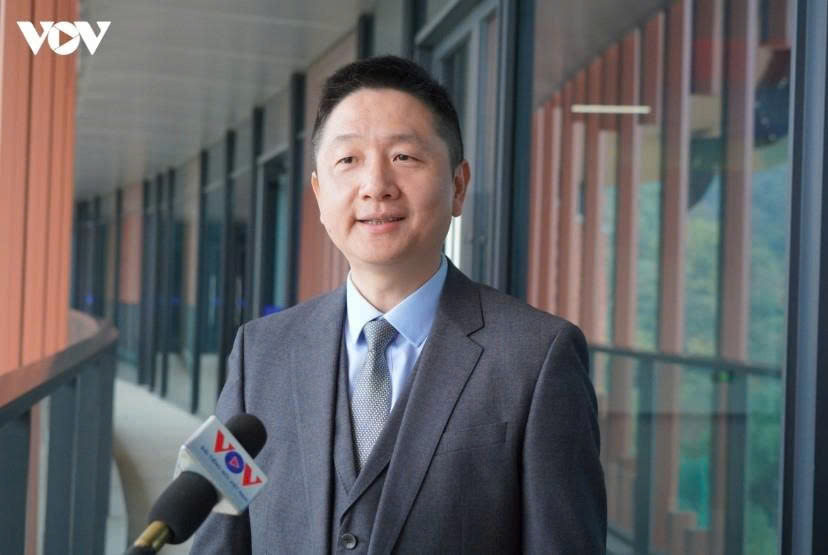
Ningbo-based Furja, from eastern China's Zhejiang Province, has operated in Song May Industrial Park in Dong Nai province since 2019. The company has so far created jobs for more than 3,000 local workers, generated over US$200 million in total export value, and entered its fifth phase of factory expansion.
Lang Yiding, General Director and Board Member of Furja, praised Vietnam's investment climate and recent government reforms. He noted that Vietnam is a very safe destination, which is vital for foreign investors, adding that strong reforms over the past two years have delivered practical benefits and reinforced Furja's confidence in choosing Vietnam.
Originally a manufacturer of household cleaning appliances, Furja is now planning to expand into building an AI computing center in Vietnam. Lang said hosting APEC 2027 will further spur Vietnam's economic growth and create new prospects for businesses, particularly in AI. He emphasized that infrastructure is key for Vietnam to keep pace with global AI trends, affirming Furja's readiness to participate and contribute to the country's AI development.
He also expressed hope that amid current global conditions, Vietnam will apply industrial electricity tariffs rather than commercial rates to AI centers to improve the operating environment for infrastructure investors, alongside easing foreign exchange controls and shortening customs clearance and approval times.
Beyond Furja, other Chinese companies are also seeking AI investments in Vietnam. Earlier, at the Vietnam-China Dialogue Forum on AI and Digital Economy held in Hanoi in late August, Chinese firms proposed a model in which Vietnam provides land, electricity, and licensing, capital could come from Hong Kong (China), and Chinese enterprises supply equipment, energy solutions, and GPU computing systems. Both sides could also jointly develop localized open-source AI models and AI agents for manufacturing, cross-border logistics, smart border gates, and agricultural traceability.
Lang voiced hope that amid opportunities from APEC 2027 and AI development, Furja's project can help fill the AI infrastructure gap in Southeast Asia. This will enable Vietnamese AI firms to access local computing power at lower costs, ease concerns over cross-border data flows, support local employment and tech talent training, strengthen the domestic AI supply chain, help Vietnam build a computing power industrial cluster, and ultimately serve as a model for Vietnam-China digital cooperation.
This would enable Vietnamese AI firms to access local computing power at lower costs, ease concerns over cross-border data flows, support local employment and tech talent training, strengthen the domestic AI supply chain, help Vietnam build a computing power industrial cluster, and further turn the company's AI project into a model for Vietnam-China digital cooperation.
Source: VOV
Original link