
Vietnam, Timor-Leste expand cooperation in food security, fisheries
Chargé d'Affaires of Vietnam to Timor-Leste Pham Binh Dam held a working session with Deputy Prime Minister and Coordinating Minister of Social Affairs Mariano Assanami Sabino Lopes in Dili on July 20 to discuss measures to advance cooperation in food security, rural development, sustainable marine resource management, and human resource training.
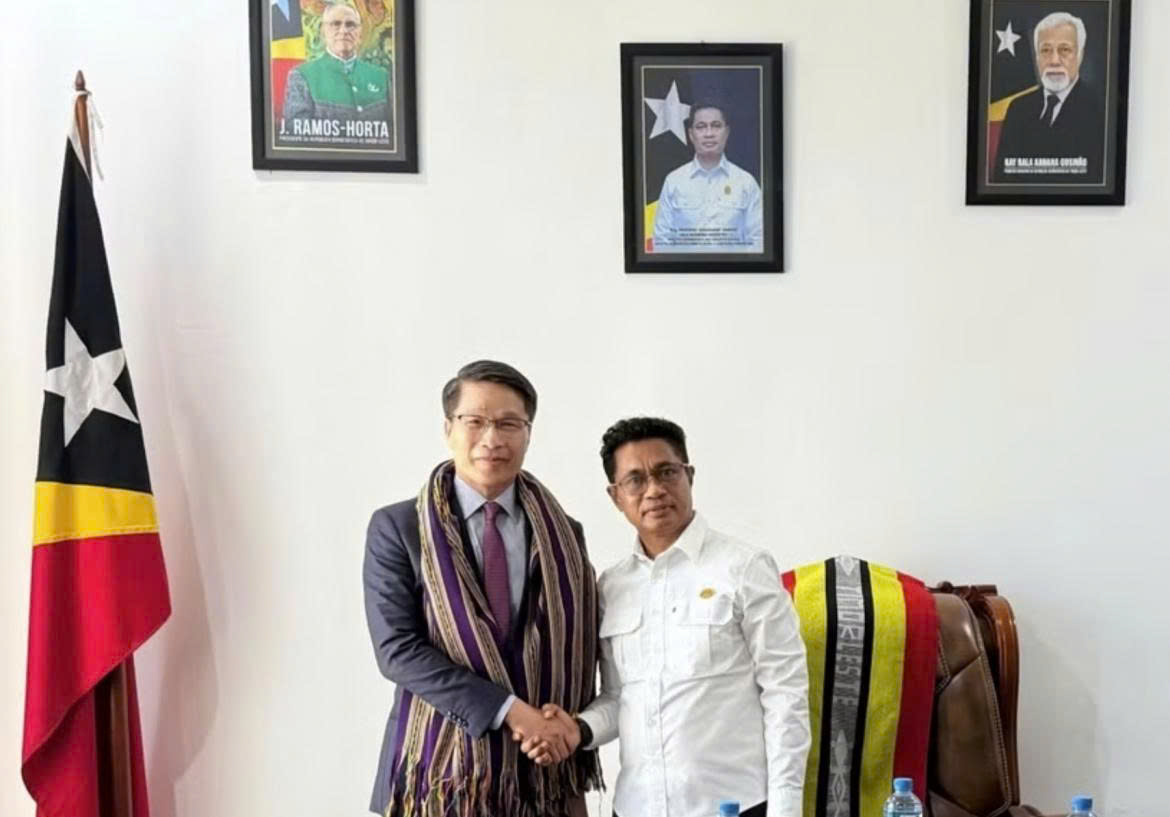
At the meeting, Deputy Prime Minister Mariano Assanami Sabino stated that domestic production currently meets only about 40% of Timor-Leste's food demand. Enhancing production capacity aims not only to increase food self-sufficiency but also aligns with broader social goals, including improving nutrition, reducing poverty, generating employment, and securing steady income for rural households.
Sharing Vietnam's development experience, Chargé d'Affaires Pham Binh Dam emphasized that bilateral food cooperation could be pursued on a mutually supportive basis. In the short term, Vietnam will continue contributing to a stable, high-quality supply of rice tailored to market demand in Timor-Leste, thereby maintaining the role of rice in bilateral trade.
Over the long term, cooperation should expand beyond trade to building local production capacity. Vietnam stands ready to share expertise in crop varieties, farming techniques, irrigation, mechanization, post-harvest preservation, and agricultural value chain development.
Regarding the fisheries sector, Deputy Prime Minister Mariano Sabino Lopes noted that Timor-Leste possesses a maritime area four times its landmass, with abundant aquatic resources. However, local capabilities in harvesting, preservation, and processing remain limited, leaving the sector's contribution to the non-oil economy modest.
The Deputy PM expressed a desire to step up experience sharing in fishing, aquaculture, and processing, initially to improve domestic food supply and create livelihoods for coastal communities, before moving toward commercial trade and exports.
Outlining potential avenues for cooperation, Pham Binh Dam highlighted that Vietnamese enterprises possess strong capabilities aligned with Timor-Leste's development needs, ranging from shipbuilding and technical transfer in fishing and aquaculture to investment in cold storage, preservation facilities, and processing. On this basis, businesses from both countries can explore suitable joint production models in Timor-Leste, combining investment with local hiring, skill training, and step-by-step technology transfer.
On the same day, Chargé d'Affaires Pham Binh Dam attended the launching ceremony of Timor-Leste's semi-industrial fishing vessels, organized by the Ministry of Agriculture, Livestock, Fisheries and Forestry, with the participation of Prime Minister Kay Rala Xanana Gusmão, Deputy Prime Minister Mariano Assanami Sabino Lopes, and Minister Marcos da Cruz.
Among the three launched vessels, one involved investment, construction, and operation by a Vietnamese firm, signaling a gradual transition by Vietnamese businesses in the host country from trade to productive investment.
To ensure these projects operate effectively and can be scaled up, both sides placed strong emphasis on human resource development. Deputy Prime Minister Mariano Assanami Sabino Lopes noted that Timor-Leste benefits from a abundant young workforce, but faces limitations in specialized technical skills.
Pham Binh Dam affirmed Vietnam's readiness to partner with Timor-Leste in vocational training and capacity building for workers. This serves as a concrete step to implement the educational cooperation agreements signed during Prime Minister Kay Rala Xanana Gusmão's visit to Vietnam last June.
Both sides agreed to maintain regular exchanges and identify priority areas to turn into concrete cooperation programs. Food security efforts will be implemented alongside rural development, livelihood expansion, job creation, and human resource enhancement, thereby contributing to a foundation for long-term stability and development in Timor-Leste.
Source: VOV
Original link