
Vietnam poised to benefit from new wave of technology investment
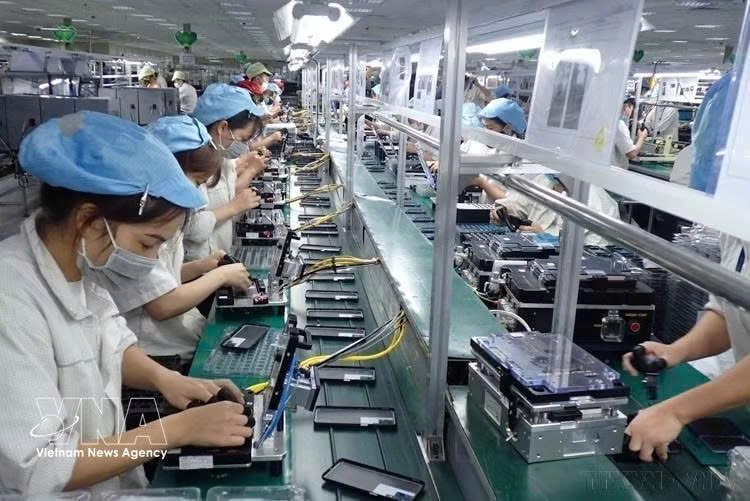
The successful development and production of high-end Pixel smartphones in Vietnam – a more complex process than manufacturing smartwatches and wireless earbuds – is reportedly giving Google confidence in moving its entire Pixel production out of China.
Global shifts in semiconductor supply chains, coupled with effective macroeconomic policies, are creating new opportunities for Vietnam to attract investment and sustain economic growth.
Nikkei Asia recently reported that Google has informed suppliers of its plan to move all production of Pixel-branded smartphones, smartwatches and wireless earbuds out of China from next year, amid continued uncertainty surrounding US-China trade tensions.
Although Google has not disclosed where production will be relocated, the company has significantly expanded manufacturing in Vietnam and India in recent years to reduce its dependence on China.
The successful development and production of high-end Pixel smartphones in Vietnam – a more complex process than manufacturing smartwatches and wireless earbuds – is reportedly giving Google confidence in moving its entire Pixel production out of China.
An industry expert told Nikkei Asia that Google faces fewer constraints than Apple because it does not sell Pixel smartphones in China, while Vietnam already has a well-established smartphone supply chain ecosystem built by Samsung that Google can tap into.
The newspaper also noted that the development of the semiconductor industry in Southeast Asia is reshaping the region’s economic landscape, putting Vietnam and the Philippines on a path towards becoming high-income economies.
George Xu, Director, Asia-Pacific Sovereign Ratings at Fitch Ratings, told Thanh Nien newspaper that Vietnam is among the beneficiaries of global supply chain restructuring, particularly the “China plus one” strategy adopted by multinational corporations.
He said strong FDI inflows are expected to continue, supporting Vietnam’s growth prospects in both the short and medium terms.
Vietnam is also well positioned to benefit from rising global demand for artificial intelligence (AI), Xu said, noting strong growth in exports of AI-related electronic products in the first half of this year.
He highlighted Vietnam’s established manufacturing facilities, testing and packaging capacity, supply networks and production expertise in the electronics and semiconductor sectors as key advantages.
According to Xu, Vietnam is therefore in a strong position to capture AI-related demand and maintain robust export growth. At the same time, its Government is seeking to attract FDI into higher value-added manufacturing, which will help boost productivity and support its ambitious growth targets.
The country’s extensive network of free trade agreements is another key advantage, allowing exporters and foreign investors to access major markets with preferential tariffs and strengthening the country’s appeal as an investment destination, he added.
Source: VNA
Original link