
Foreign investors to be widened for market access
Vietnam is moving to widen market access, improve investment incentives, and streamline procedures, with greater support tied to investors’ actual commitments and results, as part of the law on amending and supplementing a number of articles of the Law on Investment.
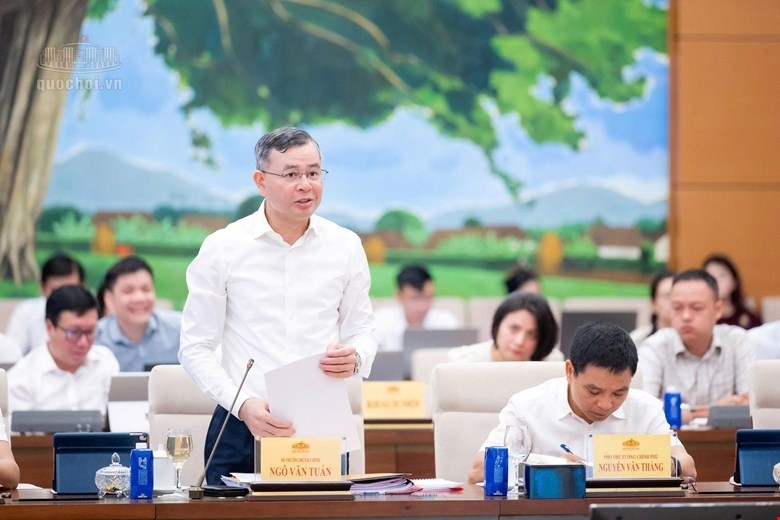
The proposal was mentioned at the sixth session of the National Assembly Standing Committee in Hanoi on September 30, on amending the Law on Investment.
The proposed amendments seek to address institutional obstructions in investment and create a framework that is more responsive to investors, while ensuring that incentives generate tangible economic and social benefits.
Presenting the government’s proposal, Minister of Finance Ngo Van Tuan said, “The draft focuses on three major areas, namely improving regulations on market access for foreign investors; renewing investment incentives and support policies; and further streamlining investment procedures and strengthening state management of foreign-invested economic activities.”
The draft law adds Clause 3a, Article 8, regarding the loosening of market access conditions for foreign investors according to a suitable roadmap based on a full and comprehensive assessment of impacts, ensuring transparency, uniform application, and non-discrimination among investors.
Besides that, it aims to improve market access for foreign investors, accelerate the process of upgrading the stock market based on substantive reforms, and resolve the pending limitations in the list of industries and trades with restricted market access.
The draft also refines regulations on investment incentives and support policies to innovate the orientation of foreign investment, build superior and competitive incentive mechanisms, and boost the green economy and digital economy.
The draft law adds new investment support methods: for supply chain development; for product manufacturing, product improvement, and innovation; and for initial investment and fixed-asset investment. In addition, it offers support for cooperation and linkages between businesses and higher education institutions, vocational education institutions, and sci-tech organisations.
The proposed approach would gradually shift from offering tax and land cost incentives towards support linked to the effectiveness of projects and their contributions over the project life cycle.
The draft also provides for incentives allowing the government to decide on exceptional support packages for projects that are considered necessary to attract and have significant spillover effects.
The draft combines the revised content relating to regulations supporting the transformation and development of eco-industrial parks to boost the green economy, and regulations on the operating period of projects in eco-industrial parks (allowing the operating period of projects to be extended but not exceeding 70 years).
Furthermore, the draft also adds regulations on localities’ specific mechanisms for attracting investment, amends and supplements regulations on the Investment Support Fund, and adds regulations on investment attraction orientation by geographical area. It also seeks to encourage investment according to regional growth poles, with priority given to high-tech and green investment in key economic areas and to processing, manufacturing and supporting services in surrounding areas.
The government expects that the new legislation will take effect by April 2027.
Nguyen Kim
Source: VIR
Original link