
Chinese auto investment tests Việt Nam’s industrial ambitions
Chinese carmakers are putting new pressure on prices and technology while testing Việt Nam’s ability to retain more value.
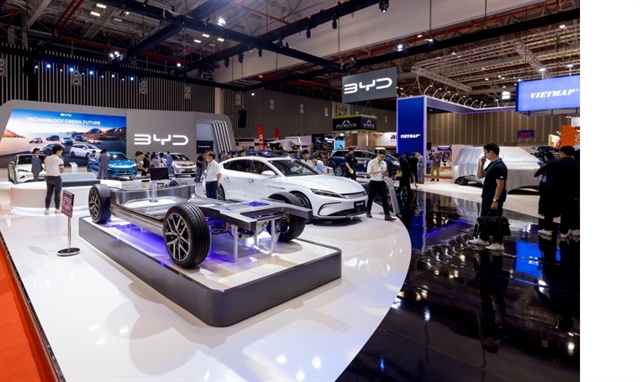
HÀ NỘI — The rapid rise of Chinese carmakers in Việt Nam is putting growing pressure on the country’s automotive industry, reshaping competition over prices, technology and production as the market shifts from imported vehicles towards local manufacturing.
Cars imported from China were worth about US$1.26 billion in the first half of 2026, making China Việt Nam’s leading source of imported cars by import value, according to data from the Department of Customs under the Ministry of Finance.
The figure reflects the rapid expansion of Chinese brands in a market where they are competing with established manufacturers from Japan, South Korea and elsewhere.
The pressure is most visible in prices. Chinese brands have brought SUVs, MPVs and electric and hybrid vehicles with increasingly high levels of equipment into price ranges traditionally occupied by mainstream Japanese and South Korean models.
Established automakers have ramped up major promotions – from massive cash discounts by Hyundai Thành Công (up to VNĐ220 million) and Toyota’s registration fee waivers to Ford’s extended warranties. While discounting is a longstanding sales tactic, the influx of competitively priced Chinese models has intensified price pressure across the entire market.
The pressure is now moving beyond showrooms.
Several Chinese automakers are establishing or planning production facilities in Việt Nam, moving from selling imported vehicles to building a local manufacturing base.
Chery, with its Omoda and Jaecoo brands, set to begin production at a new factory in northern Hưng Yên Province in mid-2026. The plant will initially produce 30,000-60,000 vehicles a year, with capacity potentially rising to 200,000 by 2030 and investment reaching $800 million at full scale.
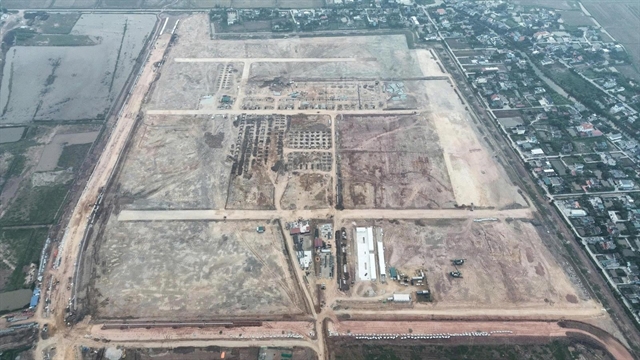
An aerial view of the site of the Omoda & Jaecoo automobile manufacturing plant in Hưng Yên Province. Photo courtesy of the firm
SAIC Motor, which operates the MG brand, is also preparing for local assembly. According to its Việt Nam operation, the company is in advanced talks with partners over a plant and expects the project to be launched from late 2027.
Earlier, one of the most advanced plans is the partnership between Tasco and Geely Auto. Their joint venture is set to develop a CKD assembly plant at the Tiền Hải Industrial Park in former Thái Bình Province (now part of Hưng Yên Province), with planned investment of about $168 million.
The 30ha plant is designed to produce up to 75,000 vehicles a year in its first phase, including Geely and Lynk & Co models. The partners also plan to attract suppliers and develop an R&D centre serving the Southeast Asian market.
These projects show how competition is changing. Chinese manufacturers are no longer relying only on imported vehicles and competitive prices. Local assembly could give them lower logistics costs, greater control over supply and a stronger position in the Vietnamese market.
For Việt Nam, however, the benefits will depend on how much of the production chain develops locally.
According to automotive expert Nguyễn Minh Đồng, the tightening in the US on rules of origin was a growing concern for Việt Nam’s automotive and supporting industries, as the country could face closer scrutiny over whether it was being used as a transit point for goods from third countries.
Đồng said incentives for foreign investment should be linked to technology transfer, local production and the development of Vietnamese suppliers.
“If they only open assembly plants, we will not learn much about technology,” he told AutoNews, noting that Việt Nam has already had decades of experience in vehicle assembly.
This is becoming more important as the industry moves towards electric and hybrid vehicles. Batteries, electric motors, power electronics and software are becoming key parts of the automotive value chain, while Vietnamese companies remain limited in many of these higher-value areas.
Bùi Quốc Huy, deputy head of the Automotive Engineering Department at Phú Thọ College of Agricultural Mechanics, said Chinese manufacturers were putting pressure on the industry not only through prices but also through the speed of technological development.
“Chinese cars are competing through the speed of technological innovation and their ability to integrate technology into vehicles,” he said.
The growing presence of Chinese manufacturers could therefore benefit consumers by bringing more choices and new technology to the market. It could also push manufacturers and suppliers in Việt Nam to improve their products and services.
But there is a risk that the country could gain more assembly capacity without developing a stronger domestic supply chain.
Experts say Việt Nam needs performance-based policies that reward companies for increasing local production, developing domestic suppliers, investing in R&D and transferring technology such as VAT and corporate income tax, rather than focusing mainly on the size of investment projects.
The growing presence of Chinese carmakers is bringing more competition and new technology to Việt Nam, but it also puts pressure on the country to strengthen its own automotive supply chain. The longer-term benefit will depend on whether more parts, technology and value are produced locally.\
Source: VNS
Original link