Please <a href='/login'>Login</a> to use our services.
If you are not our member, <a href='/register'>please register here </a> or contact us via email support@ipavietnam.org for our further support.

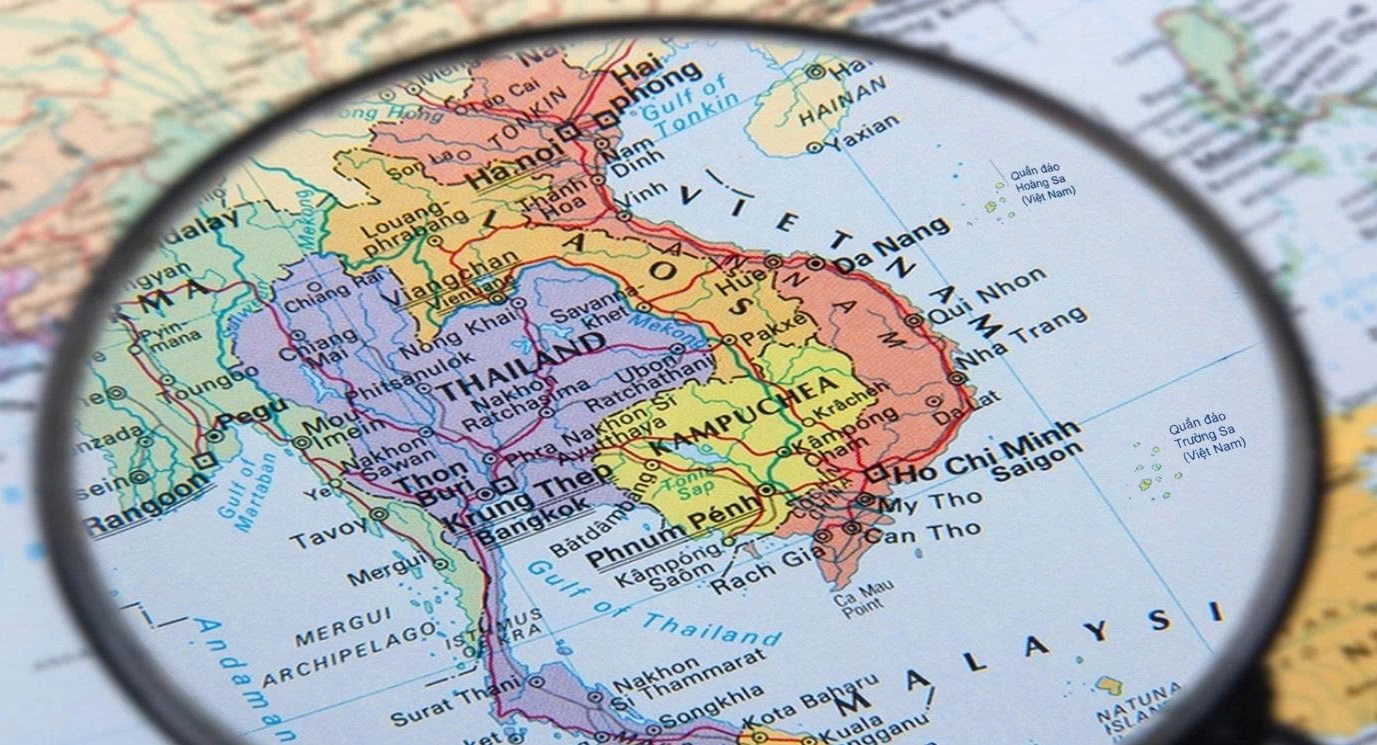
Vietnam has long been considered the cultural and artistic heart of Asia. Moreover, located in the cradle of Southeast Asia, Vietnam’s advantageous geographic location can serve as a launch pad and home base for what is already the largest collection of people on earth (the combined populations of ASEAN along with China, Japan, South Korea and Chinese Taipei account for over 2.3 billion people). East Asia is a major engine driving world economic growth, and accounts for nearly 30 percent of the global population, economy and trade.
Vietnam occupies the eastern coastline of the Southeast Asian peninsula, and shares land borders with China to the north, and Laos and Cambodia to the west. Its coastline provides direct access to the Gulf of Thailand and the East Sea.

In recent years, Vietnam has actively promoted international integration across economic, trade, and diplomatic dimensions, with the aim of enhancing its national standing and expanding development opportunities. A major milestone was Vietnam’s accession to the World Trade Organization (WTO) in 2007, which opened access to global markets and accelerated institutional reforms in line with international standards, thereby strongly attracting foreign direct investment and boosting export growth.
The network of free trade agreements (FTAs) signed by Vietnam plays a central role in its economic integration strategy. As of 2025, Vietnam has signed and is negotiating 20 FTAs with more than 60 partners across different continents, including new-generation agreements such as the Comprehensive and Progressive Agreement for Trans-Pacific Partnership (2018), the EU - Vietnam Free Trade Agreement (2021), the Regional Comprehensive Economic Partnership (2022), as well as FTAs with South Korea and Japan. These agreements significantly reduce tariffs, expand market access for Vietnamese goods, and enhance Vietnam’s appeal as a destination for foreign investment.
At the same time, Vietnam has established diplomatic relations with 194 countries, actively participates in multilateral frameworks such as APEC, ASEAN, and the United Nations, and contributes to major global economic forums. Strategic and comprehensive partnerships with leading economies further strengthen Vietnam’s position within global supply chains and international investment networks.

Vietnam is widely recognized by the international community as one of the countries with the most stable political and social environments in the Asia - Pacific region. This stability has been consistently maintained over several decades, reflected in a solid political system, coherent development orientation, and flexible governance capacity in response to global economic and geopolitical fluctuations. Public order and social security are well ensured, with low levels of social unrest, providing a strong foundation for continuous and sustainable business and production activities.
Amid a global context marked by ongoing risks such as geopolitical tensions, inflation, and supply chain disruptions, Vietnam has emerged as a “safe haven” for international investment flows. For foreign-invested enterprises, security and stability are not only fundamental prerequisites but also decisive criteria when selecting a long-term investment destination.

According to the official report of the General Statistics Office, Vietnam’s GDP in 2025 grew by approximately 8.02%, with growth momentum remaining stable and showing gradual improvement across quarters. This growth rate ranks among the highest globally, significantly outperforming many developed, developing, and regional economies.
These figures not only reflect Vietnam’s impressive economic growth performance but also represent the results of sustained institutional reforms, deeper international integration, strong attraction of foreign investment, industrial and service sector development, and the gradual upgrading of human capital quality. The continuous improvement in GDP per capita and average income levels in recent years indicates that the economy is moving to a higher stage of development, laying a solid foundation for the expansion of a rapidly growing middle class.
Vietnam’s economic structure is shifting in a positive and diversified direction, increasingly aligned with market-oriented principles. The 2025 Law on Enterprises and Law on Investment have created a more favorable environment for the development of the private sector and foreign-invested enterprises, institutionalizing business freedom for individuals and removing administrative barriers for enterprises.

Vietnam benefits from a young and dynamic population structure, which is regarded as one of its key competitive advantages in the regional and global labor markets. With a population of over 100 million people, of whom more than 60% are of working age, Vietnam is currently in a “golden population” period, providing an abundant human resource base for socio-economic development. A young workforce enables the labor market to remain highly flexible and responsive to changes in technology, production models, and evolving business requirements.
Vietnamese workers are widely recognized for their strong learning mindset, diligence, discipline, and ability to quickly absorb technical processes, particularly in manufacturing, processing industries, information technology, and services. Competitive labor costs compared to many countries in the region further enhance Vietnam’s attractiveness to foreign investors, contributing to improved operational efficiency and optimized supply chains.

Vietnam continues to strongly improve its business and investment environment, focusing on three key strategic breakthroughs: further refining a socialist-oriented market economy framework with transparency aligned to international standards; developing a modern and integrated infrastructure system; and advancing human resources through education and training, science and technology, innovation, digital transformation, while promoting the cultural values and strengths of the Vietnamese people.
The Government consistently upholds the view that the sustainable development and success of foreign-invested enterprises are an integral part of the national economy. Many ministries, agencies and local authorities have revised their management procedures, marking a strong shift from pre-inspection to post-inspection, thereby enabling FDI enterprises to operate with greater flexibility in complying with legal and administrative requirements.
At the same time, the authorities promote the application of tax incentives for high-tech industries, supporting industries, clean energy, software production, and related sectors, encouraging foreign enterprises to prioritize investment in these fields in Vietnam.